


To read old "First Page News," click here

| TO RETURN TO FIRST PAGE NEWS, CLICK HERE CLICK TO GO TO >PAGE 1> >PAGE 2> >PAGE 3> >PAGE 4> >PAGE 5> >PAGE 6> >PAGE 7> >PAGE 8> >PAGE 9> >PAGE10> >PAGE11> >PAGE 12> >PAGE 13> >PAGE 14> >PAGE 15> >PAGE 16> Photocredit for this page: Charleston C. K. Wang |
| WANG NEWS SERVICE An Independent Source of News & Views |
GOT NEWS?
GOT OPINION?
Send your information,
photographs, or
comments to
WANGNEWS for
consideration to be
published in WANG
NEWS SERVICE.
To send, use this
email address:
news@wangnews.net
GOT OPINION?
Send your information,
photographs, or
comments to
WANGNEWS for
consideration to be
published in WANG
NEWS SERVICE.
To send, use this
email address:
news@wangnews.net
 |
 |
 |
 |
 |
 |
 |
 |
 |
 |


Reach out to the
decision-makers, opinion-
agents of Greater
Cincinnati and the World.
ADVERTISE with
WANG NEWS SERVICE.
For terms and conditions,
you are invited to inquire
by email:
advertise@wangnews.net
decision-makers, opinion-
agents of Greater
Cincinnati and the World.
ADVERTISE with
WANG NEWS SERVICE.
For terms and conditions,
you are invited to inquire
by email:
advertise@wangnews.net

 |  |  |
| Current U. S. Eastern Time: |
GOT RICE?
| Those who would give up Essential Liberty to purchase a little Temporary Safety, deserve neither Liberty nor Safety - Benjamin Franklin (1759). |
May 2009 Extra
For February Extra Click Here
For February Extra Click Here

For Upcoming Sunday
Seminars on Current
Issues at Christ
Church Cathedral in
the City of Cincinnati
click here.
Seminars on Current
Issues at Christ
Church Cathedral in
the City of Cincinnati
click here.
| WANGLAW Attorneys & Counselors at Law |
CLICK HERE TO SEE
INDEX OF OP-EDS
INDEX OF OP-EDS
THE MYTH OF THE MODEL MINORITY One Sunday morning in October, our community was jolted awake by the morbid news of an apparent double murder-suicide at a local Chinese restaurant. The comments that were triggered by this tragedy on the internet and elsewhere are just as disturbing. Some people pointed to the economic slowdown and linked it with the stereotype of Asians committing suicide to escape the dishonor of business failure. Yet others manifested a glib “they are not like us” attitude. Asian American small businesses, many of which are restaurants, are an inseparable part of our economy and they share in the hard times and well as good. We are not isolated islands but every one is part of this land. The stereotype of the model Asian minority who can outwork the rest is just a myth. I know of more Asian American businesses which have closed or are closing along with the others in this downturn of economic fortunes. The unexpressed tragedy I have sensed, beginning with my own gut reaction, is that the Asian American community tends to pretend that “no big matter” has happened and life for the rest somehow will go on as normal if only we take care of our own business. This is followed by an inability to talk about and deal with such problems as a community. Because of cultural differences and language complications, generally there is also reluctance within those afflicted to reach out for help early when tragedy may yet be prevented. Beyond this, the reality is that there is limited availability of organizations and professionals to help Asian Americans who are suffering domestic violence and other severe social and mental health problems that may lead to homicide. I hope our greater community can come to view the lives lost with compassion and then reach out to help when help will still make a difference. We should realize that during these difficult times, misfortune can strike any of us. In the final reflection, we will be seen as helping ourselves. An opinion by Charleston C. K. Wang 11/11/2008. |
Free
Download
Download
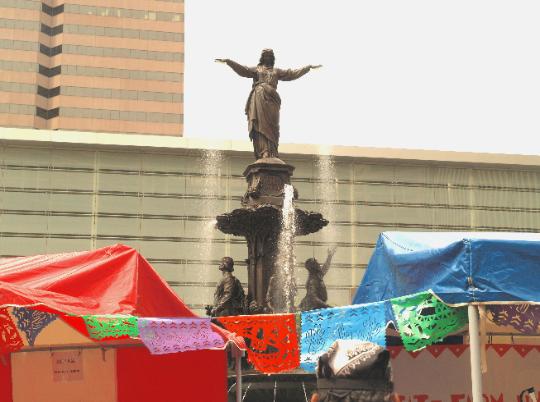


Photocredit: Charleston C K Wang






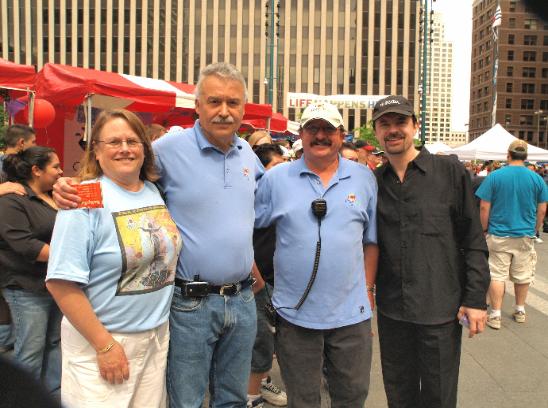
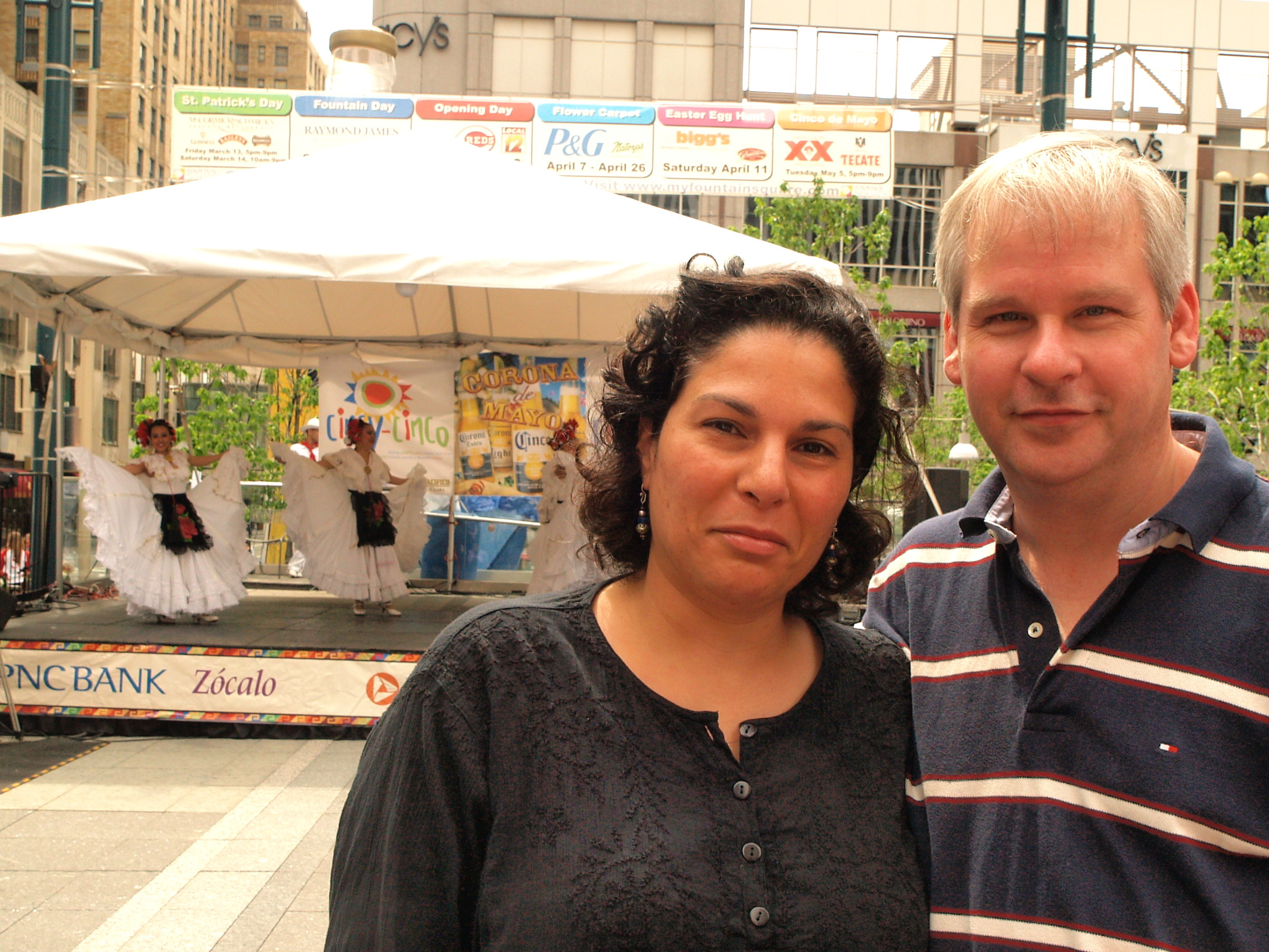
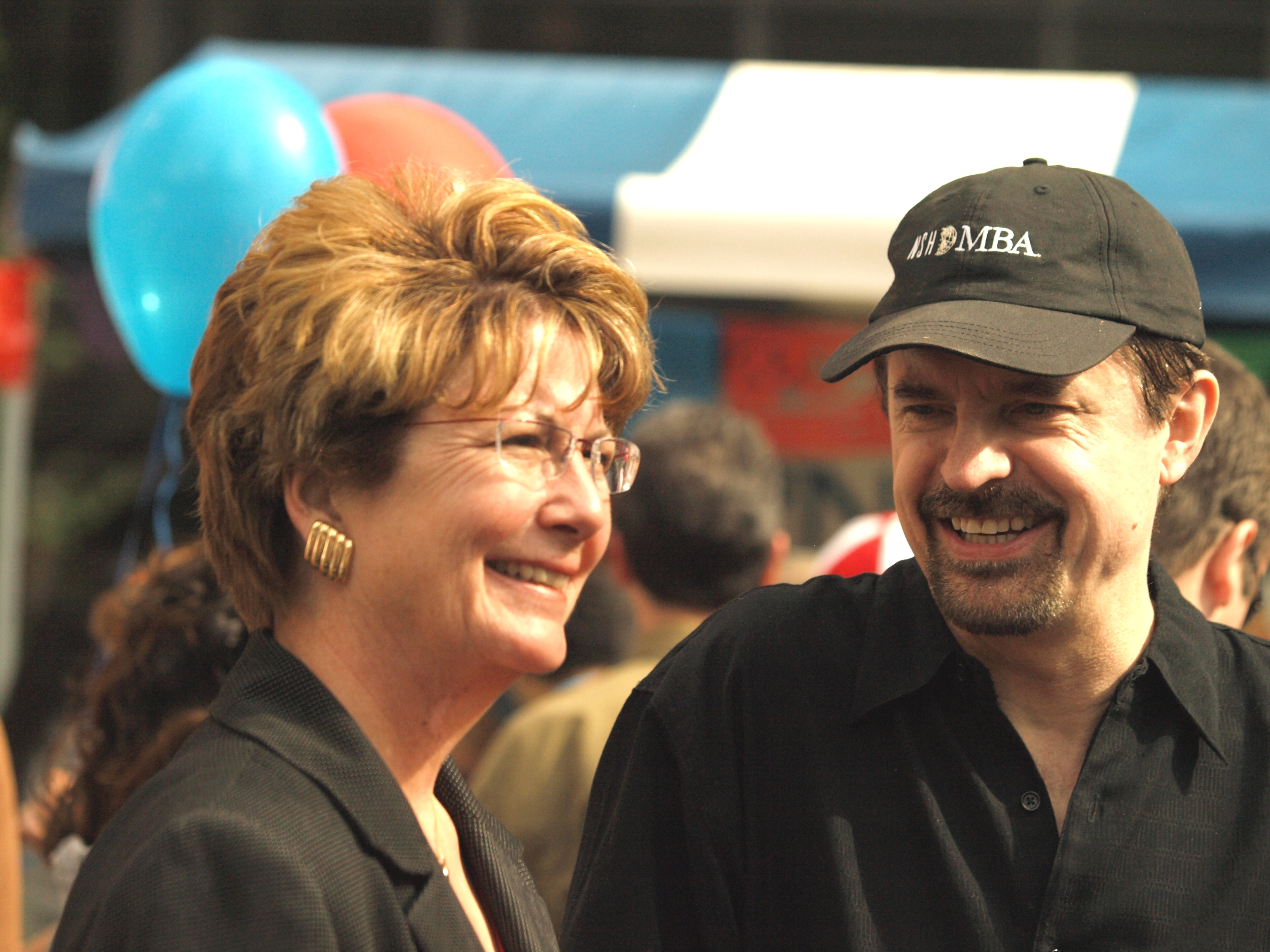
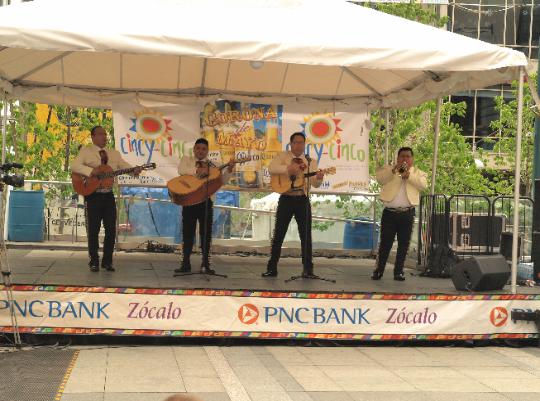
| CINCY-CINCO 2009 ON FOUNTAIN SQUARE, CINCINNATI, OHIO USA A GREAT TIME WAS ENJOYED BY ALL! |
Confound It!
Reflections on Life In the Turn Lane & Beyond
BY BEVERLY JONES
May 2, 2009
The world I live in is not The World I live in. Almost everyday I slam into yet another wall of
information that diverts my complacent, daily journey. It seems my task in these times is to reconcile
the contrast between “No! I don’t believe it - how can this be?” and the constancy of the beauty of
trees and hills in my neighborhood and my friendly relations with friends. Here I stand straddling
“Now what?”
Take the World’s Largest Garbage Dump as an example. Who knew? I certainly didn’t until last
week. There exists in the northern Pacific Ocean two slowly moving clockwise spirals of ocean
currents known as the subtropical gyre which have become repositories of our ocean trash. One
area, known as the Eastern Garbage Patch* is twice the size of Texas where
“Around and around: bottles, plastic bags, fishnets, clothing, lighters, and myriad other man-made
items, held until they disintegrate, make their way to distant seas, or merely bob among the waves
before washing up on someone’s beach.”* Thomas M. Kostigen World’s largest garbage dump
One of the scientists studying this phenomenon reminds that every bit of plastic we’ve created still
exists – it is non-biodegradable. I carry the image that as I walk down the sidewalk simultaneously
that garbage swirls around in the Pacific.
I’ve long been anti-plastic water bottles, but This!?? The cumulative results of individual behavior.
Smoking inside public spaces is now against the law, we can be fined for littering – couldn't we
arrest people with plastic anything? But those plastic refrigerator dishes are soooooo convenient!
Yeah I know: reconcile.
This one’s a bit harder and a lot nearer:
“From June (2008) through April (2009) there have been 26 human trafficking cases in Kentucky. ...
[they] have included children...who have been forced into the sex trade and adults who were
brought here and forced into prostitution.” Mary Richie. Cincinnati Enquirer, 4-29-09.
No! Not here! That’s over in Thailand or somewhere. The lesson seems to be that now we all live
‘somewhere else’ only we don’t admit it. How could I know when in ‘the world I live in’ I see the
smiles of children skipping down the aisle toward their parents after their children’s Eucharist and
the frowns of youngsters whose major worry is their vocabulary test on Friday. Reconcile.
Reconcile.
Add to these conundrums Arlen Specter’s political expediency which brings into focus the
“somewhere else” of contemporary Republicans. I will whisper this: I was once Miss Young
Republican in my hometown. That was generations ago when Rockefeller Republicans were not
just an anachronism. Now we have Olympia Snowe thinking that her version of Reagan’s “belief in
restraining government spending, pro-growth policies, tax reduction, sound national defense, and
maximum individual liberty” is all there has been to “Republicanism”. Op-Ed, NYTimes, 4-29-09.
Arlen and I don’t think so.
“Historically Rockefeller Republicans were moderate or liberal on domestic and social policies. They
typically favored New Deal programs, welfare, and civil rights.... In fiscal policy they favored
balanced budgets and relatively high tax levels. They sought long-term economic growth through
entrepreneurship, not tax cuts. ...they were strong supporters of state colleges and universities, low
tuition, and large research budgets. They favored infrastructure improvements, such as highway
projects.” Wikipedia.
Really!! Olympia is like me, she doesn’t seem to know how to reconcile disparate experiences.
The Wikipedia article offered a novel, simplistic explanation– that these shifts were Ethnic in origin:
“Many Republicans associated with this title were WASPs. As time went on, the local Republican
parties tended to nominate Catholic nominees appealing more to middle class concerns...” Hmmm –
our political arena really is a war of denominations?
Reconcile, indeed! What to do when The World I live in has movements like Green Faith in New
Jersey – a consortium of five inter-faith congregations who work to “educate and mobilize people of
diverse religious backgrounds for environmental leadership;” and in my immediate world we cannot
seem to organize Fair Trade Coffee and Tea sales in my congregation.
Reconcile indeed! To reconcile means to bring into “friendly relations – harmony” say the
dictionaries. Harmony, Wendell Berry teaches, is balance. That’s it - I’m working to balance The
World I live in with the world in which I live; but, as in personal reconciliation, a time sometimes
comes when people must agree to disagree, when the recognition dawns that not everything can be
resolved; when the fighting stops. In his book A Continuous Harmony Berry uses a Thomas Merton
quote that exactly fits my predicament. In speaking of the Shakers Merton said:
“When you expect the world to end at any moment, you know there is no need to hurry. You take
your time, you do your work well.”
I’ll try.
After I wash my hands.
© Beverly Jones 2009. Doing Good. Together.
Greetings from the Columbine blooms. Goodbye Red Bud; Hello Dogwood
Reflections on Life In the Turn Lane & Beyond
BY BEVERLY JONES
May 2, 2009
The world I live in is not The World I live in. Almost everyday I slam into yet another wall of
information that diverts my complacent, daily journey. It seems my task in these times is to reconcile
the contrast between “No! I don’t believe it - how can this be?” and the constancy of the beauty of
trees and hills in my neighborhood and my friendly relations with friends. Here I stand straddling
“Now what?”
Take the World’s Largest Garbage Dump as an example. Who knew? I certainly didn’t until last
week. There exists in the northern Pacific Ocean two slowly moving clockwise spirals of ocean
currents known as the subtropical gyre which have become repositories of our ocean trash. One
area, known as the Eastern Garbage Patch* is twice the size of Texas where
“Around and around: bottles, plastic bags, fishnets, clothing, lighters, and myriad other man-made
items, held until they disintegrate, make their way to distant seas, or merely bob among the waves
before washing up on someone’s beach.”* Thomas M. Kostigen World’s largest garbage dump
One of the scientists studying this phenomenon reminds that every bit of plastic we’ve created still
exists – it is non-biodegradable. I carry the image that as I walk down the sidewalk simultaneously
that garbage swirls around in the Pacific.
I’ve long been anti-plastic water bottles, but This!?? The cumulative results of individual behavior.
Smoking inside public spaces is now against the law, we can be fined for littering – couldn't we
arrest people with plastic anything? But those plastic refrigerator dishes are soooooo convenient!
Yeah I know: reconcile.
This one’s a bit harder and a lot nearer:
“From June (2008) through April (2009) there have been 26 human trafficking cases in Kentucky. ...
[they] have included children...who have been forced into the sex trade and adults who were
brought here and forced into prostitution.” Mary Richie. Cincinnati Enquirer, 4-29-09.
No! Not here! That’s over in Thailand or somewhere. The lesson seems to be that now we all live
‘somewhere else’ only we don’t admit it. How could I know when in ‘the world I live in’ I see the
smiles of children skipping down the aisle toward their parents after their children’s Eucharist and
the frowns of youngsters whose major worry is their vocabulary test on Friday. Reconcile.
Reconcile.
Add to these conundrums Arlen Specter’s political expediency which brings into focus the
“somewhere else” of contemporary Republicans. I will whisper this: I was once Miss Young
Republican in my hometown. That was generations ago when Rockefeller Republicans were not
just an anachronism. Now we have Olympia Snowe thinking that her version of Reagan’s “belief in
restraining government spending, pro-growth policies, tax reduction, sound national defense, and
maximum individual liberty” is all there has been to “Republicanism”. Op-Ed, NYTimes, 4-29-09.
Arlen and I don’t think so.
“Historically Rockefeller Republicans were moderate or liberal on domestic and social policies. They
typically favored New Deal programs, welfare, and civil rights.... In fiscal policy they favored
balanced budgets and relatively high tax levels. They sought long-term economic growth through
entrepreneurship, not tax cuts. ...they were strong supporters of state colleges and universities, low
tuition, and large research budgets. They favored infrastructure improvements, such as highway
projects.” Wikipedia.
Really!! Olympia is like me, she doesn’t seem to know how to reconcile disparate experiences.
The Wikipedia article offered a novel, simplistic explanation– that these shifts were Ethnic in origin:
“Many Republicans associated with this title were WASPs. As time went on, the local Republican
parties tended to nominate Catholic nominees appealing more to middle class concerns...” Hmmm –
our political arena really is a war of denominations?
Reconcile, indeed! What to do when The World I live in has movements like Green Faith in New
Jersey – a consortium of five inter-faith congregations who work to “educate and mobilize people of
diverse religious backgrounds for environmental leadership;” and in my immediate world we cannot
seem to organize Fair Trade Coffee and Tea sales in my congregation.
Reconcile indeed! To reconcile means to bring into “friendly relations – harmony” say the
dictionaries. Harmony, Wendell Berry teaches, is balance. That’s it - I’m working to balance The
World I live in with the world in which I live; but, as in personal reconciliation, a time sometimes
comes when people must agree to disagree, when the recognition dawns that not everything can be
resolved; when the fighting stops. In his book A Continuous Harmony Berry uses a Thomas Merton
quote that exactly fits my predicament. In speaking of the Shakers Merton said:
“When you expect the world to end at any moment, you know there is no need to hurry. You take
your time, you do your work well.”
I’ll try.
After I wash my hands.
© Beverly Jones 2009. Doing Good. Together.
Greetings from the Columbine blooms. Goodbye Red Bud; Hello Dogwood

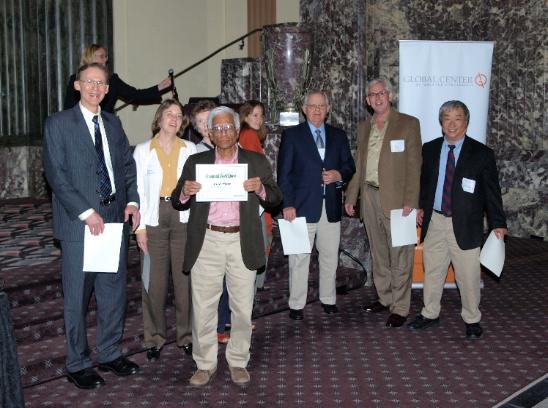
| GLOBE TREKKERS WIN FIRST PLACE IN 2009 CINCINNATI WORLD QUEST - WORLD KNOWLEDGE COMPETITION at the Netherlands Hilton, Downtown Cincinnati on 04/22/2009. Organized by the Global Center of Greater Cincinnati - International Visitor's Council - World Affairs Council of Greater Cincinnati |
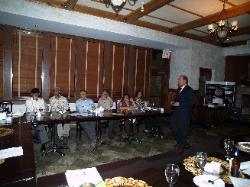
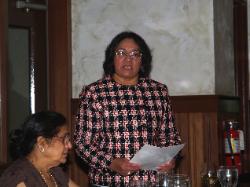
| 4th OHIO ASIAN AMERICAN HEALTH CONFERENCE Saturday, MAY 30th 2009 7:30 AM - 6:30 PM AT THE CINCINNATI NORTHEAST MARRIOTT HOTEL (Off I-71N Fields Ertel Road Exit) Complimentary Breakfast and Lunch will be Available Presented by the Asian Community Alliance, Inc. Ohio Asian American Health Coalition CONFERENCE THEME ASIAN AMERICAN HEALTH DISPARITIES: THE 21st CENTURY CHALLENGES & OPPORTUNITIES This event is free to the public Register on-line at www.acacinci.org Or email local contact Chandra Prasad, by clicking here. For more information click here. Photos Above: On March 7, 2009, the Ohio Asian American Health Coalition conducted a dinner meeting at Apsara Restaurant to inform health professionals on the topic of Hepatitis B and its treatment. Dilip K. Moonka M.D. from the Henry Ford Hospital, Detroit was the speaker (photo on left). Dr. Moonka is Board Certified in Gastroenterology, Transplant Hepatology and Internal Medicine. In photo on right, Kirti Rege welcomes the attendees. As a follow-up WANGNEWS is pleased to include the following bi-lingual informational write-up on Hepatitis B Asians and Pacific Islanders Face Silent Epidemic – Part I -Infection with the hepatitis B virus (HBV) is a major health problem for Asians and Pacific Islanders living in the United States. Hepatitis B infection is a primary cause of liver disease, particularly liver cancer. Of the estimated 1.25 million individuals in the United States chronically (permanently) infected with HBV, more than half are Asian/Pacific Islanders. In fact, one in ten Asian/Pacific Islanders is chronically infected with HBV; this compares to a rate of 1 in 400 for all U.S. residents. Experts believe that most individuals are currently unaware that they carry the virus, since the disease can be asymptomatic for many years. Without medical monitoring and treatment, 25% of these individuals will develop fatal liver disease. This article is the first in a three-part series offering information to the Asian/Pacific Islander community about hepatitis B. It corresponds with the initiation of the Jade Ribbon Arizona campaign, which is a hepatitis B information and outreach program targeting the local Asian/Pacific Islander community. Jade Ribbon Arizona is being coordinated by the Asian Pacific Community in Action through a grant from the Arizona Department of Health Services. Part I of the series will provide basic information about hepatitis B. Part II will discuss hepatitis B among Asian/Pacific Islanders. Part III will provide an update regarding the care and treatment for those infected with HBV. What is hepatitis B? Hepatitis B is caused by a virus that attacks the liver. The virus, which is called hepatitis B virus (HBV), can cause lifelong infection, cirrhosis (scarring) of the liver, liver cancer, liver failure, and death. How is HBV spread? HBV is spread when blood from an infected person enters the body of a person who is not infected. Typically, this occurs through sexual contact and/or sharing needles. HBV can also be spread from infected mothers to infants at the time of birth. In Asia and the Pacific Islands, mother-to-baby transmission is common. HBV can also be spread through close household contact (e.g., sharing a toothbrush and contact with fluid from skin lesions). HBV is not spread through food or water, sharing eating utensils, breastfeeding, hugging or kissing. Why is hepatitis B so dangerous? Hepatitis B is dangerous because it is a “silent infection” that can infect people without them knowing it. Most people who are infected with hepatitis B are unaware > of their infection and can unknowingly pass the virus to others through their blood and infected bodily fluids. For those who become chronically infected, there is an increased risk of developing serious liver disease later in life. The virus can quietly and continuously attack the liver over many years without being detected. How do you know if you have hepatitis B? Individuals with HBV often do not have any immediate symptoms after becoming infected. In fact, it is possible to have the infection for decades without symptoms. A simple blood test can determine if someone carries the virus. What are the symptoms of hepatitis B? If symptoms do occur, they occur on average 12 weeks after exposure to HBV. Sometimes a person with HBV infection has no symptoms at all. The older you are at time of infection, the more apt you are to have symptoms. If you have symptoms, they might include: yellow skin or yellowing of the whites of your eyes, tiredness, loss of appetite, nausea, abdominal discomfort, dark urine, clay-colored bowel movements and joint pain. Who should be tested for hepatitis B? The Centers for Disease Control and Prevention now recommends HBV testing for the following groups: persons born in Asia, the Pacific Islands, and certain areas of Africa, South America, Eastern Europe and the Middle East; injecting drug users, and men who have sex with men. If I am chronically infected with hepatitis B, is there a cure? While there currently is no cure for chronic hepatitis B infection, there are now several FDA-approved medications that have been shown to be effective in slowing the replication of the virus and reducing potential liver damage. How can I protect myself from getting infected with hepatitis B? There is a vaccine that effectively prevents hepatitis B infection. This vaccine, which is typically given in three separate doses, is recommended for all newborns and anyone else at increased risk for hepatitis B infection, including but not limited to health care workers, men who have sex with men, and injecting drug users. 一個幸存者的故事: 第一節 - 診斷 2006年3月,余美是一個健康的50歲婦女,有丈夫、兩個孩子、一個 成功的職業生涯和大致來說算是蠻幸福的生活。 倒是真的,她的丈夫剛剛因前列腺癌動過手術,但手術 順利,手術後情況良好。 現在,她和她的丈夫被要求回到他的醫生辦公室進行特別諮商。什麼地方出錯 了?難道他的手術終究出了問題? “你的術前血液測試顯示您已經接觸了乙型肝炎”醫生告訴她的丈夫。 “你不帶病毒,但你已接觸到它。你有沒有任何偶然性行爲或使用注射毒品的歷史?”經過她的丈夫解釋 說:他沒有已知的乙型肝炎危險因素後,醫生轉向余女士, “你的家人是否有乙型肝炎病毒感染的歷 史?” 她怔住了。突然,她想起童年在香港時她的祖母的黃色眼睛。她依稀記得黃疸是乙型肝炎症狀。 她意識到她可能是她的丈夫感染的來源。她決定接受乙型肝炎血液檢驗,並在等待檢驗結果時,花了很 多時間在網上試圖找到所有她能找到的乙型肝炎信息。 “當我發現乙型肝炎是性傳播時我很不好意思,” 余美回想。“我不知道別人會怎麽想我-也許會認爲我沒有良好的衛生習慣。” 此時,余女士的檢驗結果回 來,她發現她確實感染了慢性乙型肝炎。“我首先想到的是:我就要死了,”她說。 “我這樣一個50歲相對 年輕的女人將死於這種疾病。我不知道該怎麼辦。” 余女士停止了外出,甚至停止了工作。目前甚至從醫 學界看來都希望渺茫。 “我的家庭醫生向我推薦了內科醫師,” 她回憶。 “但那位內科醫師從未治療過乙 型肝炎患者。我簡直不敢相信。在這裡,我被診斷患有乙型肝炎,而醫生從未治療過乙型肝炎病患。醫 生諮詢了同事,找到新的乙型肝炎的治療方法。他建議余女士考慮開始吃新的口服藥物。 “我告訴我的醫 生,我會考慮,如果我想要治療的話我會讓他知道的, ”她說。 “這是我一生中最可怕的兩三個月。” 下 個問題:第二節 - 應付慢性乙型肝炎感染 This is the English translation: A Survivor’s Story – Part 1 - Diagnosis. In March 2006, Mei Yu was a healthy 50-year- old woman with a husband, two children, a successful professional career, and a generally happy life. True, her husband had just been through surgery for prostate cancer, but the surgery had gone well, and the prognosis was good. Now, she and her husband had been called back to his doctor’s office for a special consultation. What could be wrong? Had there been a problem with his surgery after all? “Your pre-surgical blood test indicates that you have been exposed to hepatitis B,” the doctor said to her husband. “You don’t carry the virus, but you have been exposed to it. Do you have any history of casual sex or using injecting drugs?” After her husband explained that he had no known risk factors for hepatitis B, the doctor turned to Mei Yu. “Does your family have a history of hepatitis B infection?” She was floored. Suddenly, she remembered from her childhood in Hong Kong her grandmother’s yellow eyes. She vaguely remembered that jaundice is a symptom of hepatitis. It dawned upon her that she may be the source of her husband’s exposure. She decided to get the hepatitis B blood test and, while waiting for the test results, spent many hours on the Internet trying to find out all she could about hepatitis B. “I was so embarrassed when I found out that hepatitis B is sexually-transmitted,” reflects Mei Yu. “I didn’t know what people would think about me – perhaps that I didn’t practice good hygiene.” In the meantime, Mei Yu’s test results came back, and she found out that she was indeed chronically infected with hepatitis B. “The first thing I thought was that I was going to die,” she says. “Here I am, a relatively young woman in her fifties, and I am going to die from this disease. I didn’t know what to do.” Mei Yu stopped going out and even stopped going to work. There seemed to be little hope, even from the medical community. “My family doctor referred me to an internist,” she remembers. “But the internist had never treated anyone for hepatitis B infection. I couldn’t believe it. Here I was diagnosed with hepatitis B and was being treated by a doctor who had never seen a hepatitis B patient. The doctor consulted with a colleague and found out about the new hepatitis B treatments available. He suggested that Mei Yu consider starting on the new oral medications. “I told my doctor that I would think about it, and that I would let him know if I want to be treated,” she says. “It was the most terrible two or three months of my life.” Next issue: Part II – Coping with chronic hepatitis B infection. |
| V More Photonews to come. Visit www.wangnews.net again and soon! V V |
YOU ARE INVITED! The Cincinnati Human Relations Commission presents ... Healthy Multicultural Communities A Southwest Ohio Regional Conference on Cultural Diversity Awareness Saturday May 16, 2009 9:00am—3:00pm Sharonville Convention Center 11355 Chester Rd. Sharonville, OH 45246 Workshops & Interactive Diversity Drama Topics Include: •Definitions of immigrant, refugee, and asylee •Diversity in school and the workplace •Health consequences of ethnic intimidation, such as stroke and mental health •Legal consequences of ethnic intimidation and how to prevent it Event free and open to public No RSVP necessary Free parking Refreshments provided Shuttle transportation will be provided to event. For more information about the conference call (513) 352-3237 or visit www.chrc.us. |
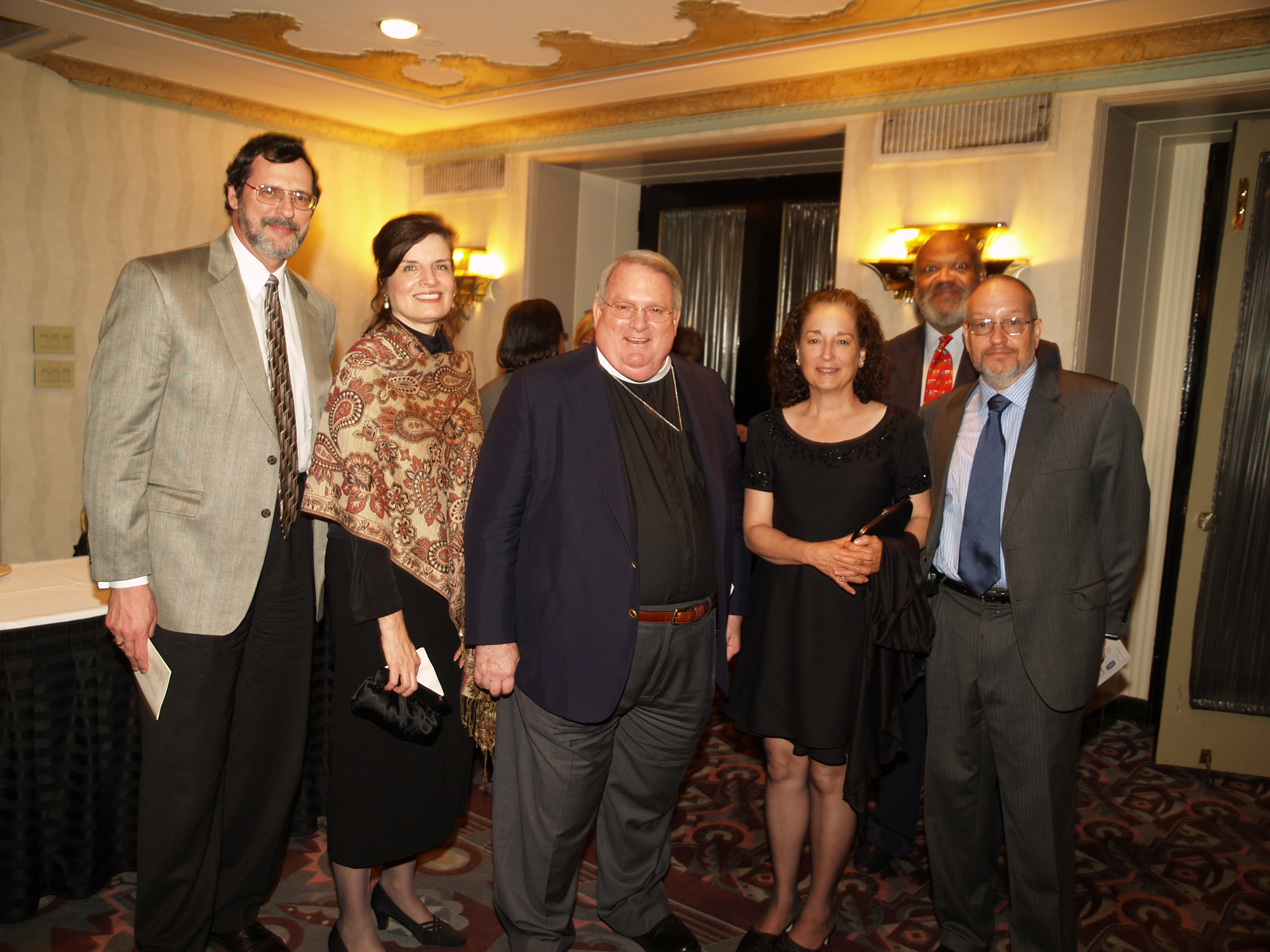
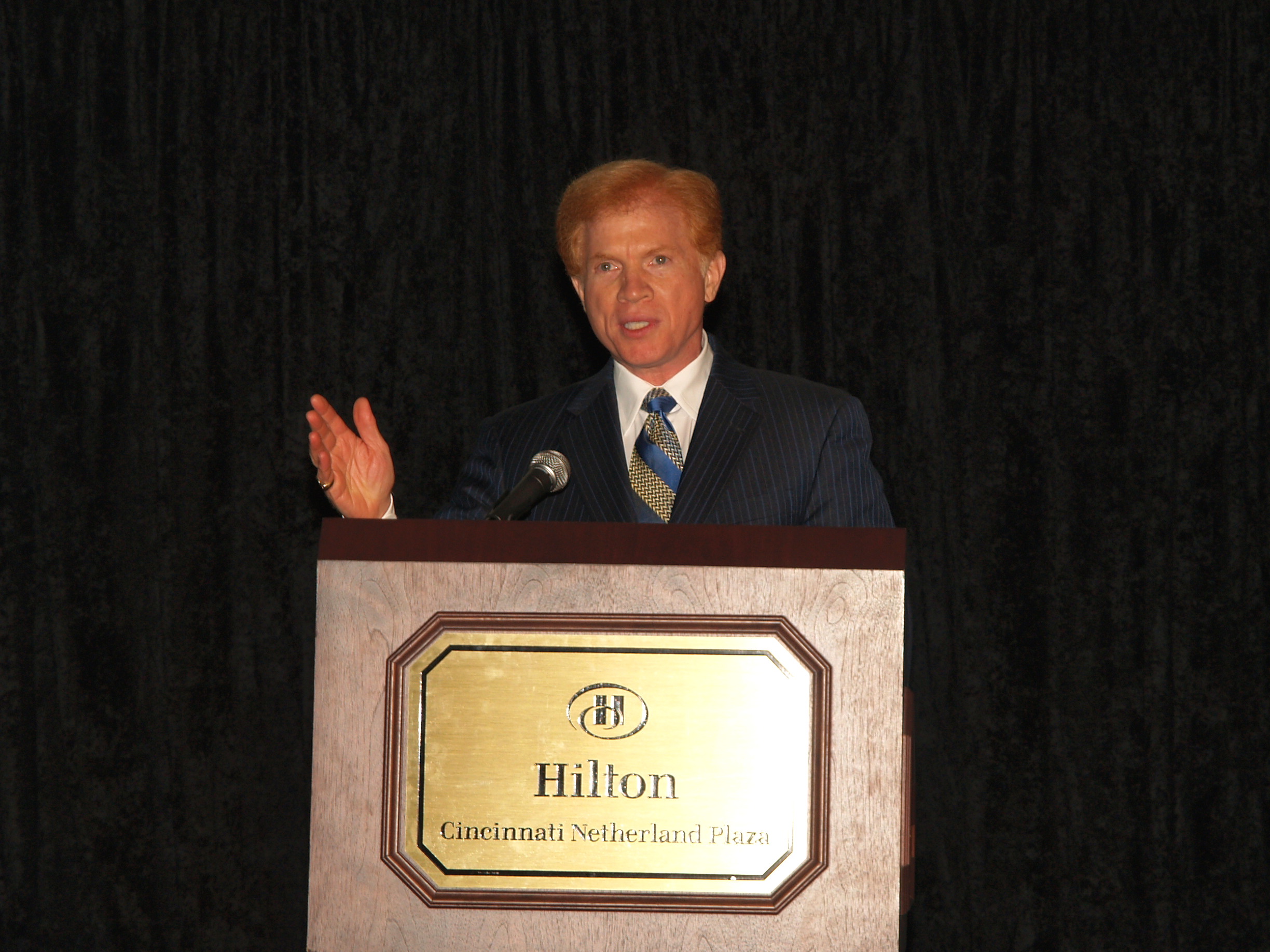
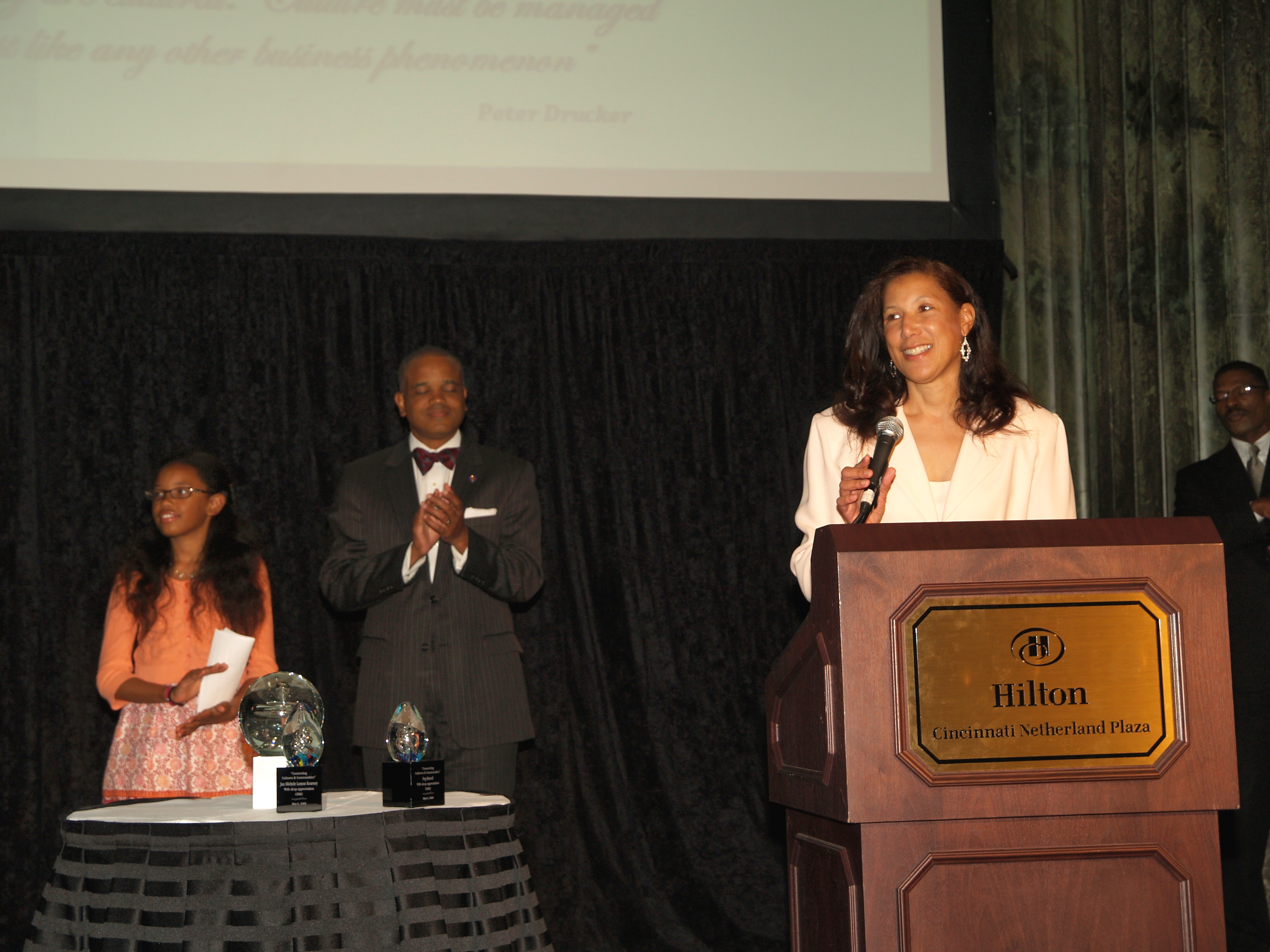
| On 5/6/3009, the Cincinnati Human Relations Commission held its Annual Dinner. Dr. Victor Garcia, Cultures & Communities. Ivy Williams and Dr. Stephen Price won the Merlin Pope, Jr. Leadership Diversity Award. Dr. Gary Zola was conferred the Bishop Herbert Thompson, Jr. Distinguished Humanitarian Award. Photo above on left shows Jan Michele Lemon Kearney with Senator Eric Kearney and Celeste Kearney looking on. Photo above centers shows the representatives from Christ Church Cathedral. Photo above on right shows Dr. Gary Zola. |
CLOSURE OF U. S. IMMIGRATION
COURT IN CINCINNATI PROMPTS
CONGRESSIONAL LETTER OF INQUIRY
The April 6, 2009 closure of the U. S. Immigration Court (Executive Office of Immigration Review) located on
the 4th Floor of the Federal Office Building, 550 Main Street, Cincinnati, Ohio and the transfer of currently
pending and future cases to Cleveland, Ohio has prompted a joint letter of inquiry from U. S. Senator Sherrod
Brown and U.S. Representative Steve Driehaus. Click here to read their letter dated April 14. The sudden
closure of the Cincinnati location is expected to impose additional expenses on immigrants who are to
appear before the U. S. Immigration Court. A number of such persons are still waiting for an Employment
Authorization Document and therefore have no legal documentation to obtain an Ohio Driver's License and do
not own a car. The 500 miles round trip is a heightened burden, especially if an immigrant must spend 1 -2
days to travel the round-trip to Cleveland by bus. It is feared that some immigrants will be deported in
absentia. The better approach is to resume court proceedings in the Federal Office Building in Cincinnati as
that courtroom is fully equipped with tele-video conferencing capability which facilitates appearances before
Immigration Judges in Cleveland, Ohio, Arlington, Virginia or anywhere else. Tele-video appearances are
currently in use for immigrants who are detained in the Butler County Jail in the City of Hamilton, Ohio. The
re-opening of the Cincinnati court will also benefit the environment as it is a conservation of unnecessary
highway travel for thousands of individuals which add up to millions of miles.
COURT IN CINCINNATI PROMPTS
CONGRESSIONAL LETTER OF INQUIRY
The April 6, 2009 closure of the U. S. Immigration Court (Executive Office of Immigration Review) located on
the 4th Floor of the Federal Office Building, 550 Main Street, Cincinnati, Ohio and the transfer of currently
pending and future cases to Cleveland, Ohio has prompted a joint letter of inquiry from U. S. Senator Sherrod
Brown and U.S. Representative Steve Driehaus. Click here to read their letter dated April 14. The sudden
closure of the Cincinnati location is expected to impose additional expenses on immigrants who are to
appear before the U. S. Immigration Court. A number of such persons are still waiting for an Employment
Authorization Document and therefore have no legal documentation to obtain an Ohio Driver's License and do
not own a car. The 500 miles round trip is a heightened burden, especially if an immigrant must spend 1 -2
days to travel the round-trip to Cleveland by bus. It is feared that some immigrants will be deported in
absentia. The better approach is to resume court proceedings in the Federal Office Building in Cincinnati as
that courtroom is fully equipped with tele-video conferencing capability which facilitates appearances before
Immigration Judges in Cleveland, Ohio, Arlington, Virginia or anywhere else. Tele-video appearances are
currently in use for immigrants who are detained in the Butler County Jail in the City of Hamilton, Ohio. The
re-opening of the Cincinnati court will also benefit the environment as it is a conservation of unnecessary
highway travel for thousands of individuals which add up to millions of miles.

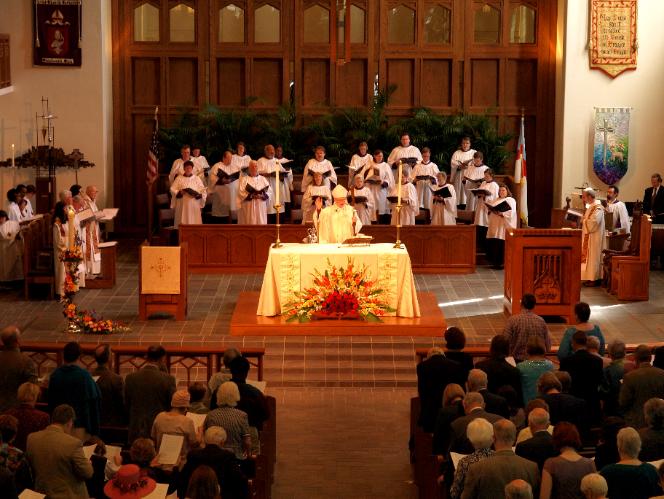
On 04/12/2009, Bishop Thomas E. Breidenthal delivered the Easter Sermon at Christ Church Cathedral
in downtown Cincinnati. Reprinted here is the excerpt of the Sermon which touches on immigration:
"...... We have struggled as Christians to embrace the mingling of races and cultures - indeed, we have
begun to welcome this mingling as a sign of the global community that is emerging. But what about the
opening of our borders to immigrants without restriction? Let me tell you about a recent event here in
Cincinnati that made this question very real for me. An active member of one of our local Episcopal
churches was recently stopped - apparently for no other reason than for looking Guatemalan -
imprisoned for being undocumented, and deported, all within the last week, leaving a wife and children
with whom he was not allowed to communicate. What can I say? We live in a time when globalization
seems to go hand in hand with more and more barriers separating people from one another. We want
money to move freely, but not human beings. This is not to say that borders should be done away with.
They establish national sovereignty, and this in turn ensures mutual accountability and the rule of law at
the local level. But do borders establish an absolute right to keep the stranger and the foreigner out?
Are those who cross those borders without permission criminals? Does the crossing of borders cancel
out the regard we have for the integrity and security of families? This should not be a new question for
us. For at least a thousand years Christian ethicists have been teaching that people ought to be able to
cross borders freely, since the whole earth is meant to be a home for all human beings. .................."
To read the complete Sermon, click here.
in downtown Cincinnati. Reprinted here is the excerpt of the Sermon which touches on immigration:
"...... We have struggled as Christians to embrace the mingling of races and cultures - indeed, we have
begun to welcome this mingling as a sign of the global community that is emerging. But what about the
opening of our borders to immigrants without restriction? Let me tell you about a recent event here in
Cincinnati that made this question very real for me. An active member of one of our local Episcopal
churches was recently stopped - apparently for no other reason than for looking Guatemalan -
imprisoned for being undocumented, and deported, all within the last week, leaving a wife and children
with whom he was not allowed to communicate. What can I say? We live in a time when globalization
seems to go hand in hand with more and more barriers separating people from one another. We want
money to move freely, but not human beings. This is not to say that borders should be done away with.
They establish national sovereignty, and this in turn ensures mutual accountability and the rule of law at
the local level. But do borders establish an absolute right to keep the stranger and the foreigner out?
Are those who cross those borders without permission criminals? Does the crossing of borders cancel
out the regard we have for the integrity and security of families? This should not be a new question for
us. For at least a thousand years Christian ethicists have been teaching that people ought to be able to
cross borders freely, since the whole earth is meant to be a home for all human beings. .................."
To read the complete Sermon, click here.
| BISHOP THOMAS BREIDENTHAL TOUCHES ON PLIGHT OF IMMIGRANTS DURING EASTER SERMON |
| Abraham was an Immigrant: A Theological Reflection Abraham is widely accepted as a patriarch of the three great monotheistic faiths of the World. Abraham was an immigrant. His father, Terah was from the land of Ur of the Chaldeans (somewhere in present day Iraq) and while the tribe was resting at Haran, Terah died. Abraham, then known as Abram, heard God tell him to get out of his country and from his father's house to a land that God will reveal. Abram, whose obedience is renowned, complied. .... For rest of reflection click here. |