

For Upcoming Sunday
Seminars on Current Issues
at Christ Church Cathedral
in the City of Cincinnati
click here.
Seminars on Current Issues
at Christ Church Cathedral
in the City of Cincinnati
click here.

To view
"Ephesus
of St. Paul
and St.
John"
click here.
"Ephesus
of St. Paul
and St.
John"
click here.
| To read "The Road to Emmaus," click here. |


THE ASIAN AMERICAN HOUR has gotten bigger - we are now on the air weekly on public radio WAIF-CINCINNATI 88.3 FM and our broadcast time has moved to prime-time THE ASIAN AMERICAN HOUR CELEBRATES 12 YEARS ON THE AIR WITH WAIF 88.3 FM - Date of First Broadcast: 6/7/2001 THE ASIAN AMERICAN HOUR will continue to feature talk, and music, and other good things with a discernable slant towards Asian American affairs, immigration, and many other issues of interest to our community-at-large. THE ASIAN AMERICAN HOUR is produced and hosted by Charleston Wang with Mary Joan Reutter as co-host, together with our distinguished guests. So, tune in to THE ASIAN AMERICAN HOUR on WAIF-CINCINNATI 88.3 FM. every Monday 5-6 PM. Get the latest on the Asian American community in Cincinnati, the fast growing & mobile community in the Tri-state. After listening to the THE ASIAN AMERICAN HOUR, e-mail us direct feedback and thoughts by clicking here. If you or a friend wish to be a guest on THE ASIAN AMERICAN HOUR, please let us know. Tune in to THE ASIAN AMERICAN HOUR every Monday 5 - 6 PM on WAIF 88.3 FM Cincinnati on the air, or listen Via internet streaming audio from anywhere in the world by clicking here. September 9, 2013 - Thailand Update with John O'Neill |

| THE ASIAN AMERICAN HOUR on WAIF 88.3 FM Cincinnati IS NOW A WEEKLY PRIME-TIME SHOW EVERY MONDAY EVENING 5 - 6 P.M. Informing the People of Cincinnati (and Beyond) since 6/7/2001. Listen via internet streaming audio by clicking here, CONTACT US AT asianamericanhour@wangnews.net |

To read old "First Page News," click here
| WANG NEWS SERVICE An Independent Source of News & Views |
GOT NEWS?
GOT
OPINION?
Send your
information,
photographs, or
comments to
WANGNEWS for
consideration to be
published in
WANG NEWS
SERVICE.
To send, use this
email address:
news@wangnews.net
GOT
OPINION?
Send your
information,
photographs, or
comments to
WANGNEWS for
consideration to be
published in
WANG NEWS
SERVICE.
To send, use this
email address:
news@wangnews.net
 |
 |
 |
 |
 |
 |
 |
 |
 |
 |

Mary Ellen O'Connell

Photocredit: Mary Joan Reutter
YPIMgReach out to the
decision-makers, opinion-
agents of Greater
Cincinnati and the World.
ADVERTISE with
WANG NEWS SERVICE.
For terms and conditions,
you are invited to inquire
by email:
advertise@wangnews.net
decision-makers, opinion-
agents of Greater
Cincinnati and the World.
ADVERTISE with
WANG NEWS SERVICE.
For terms and conditions,
you are invited to inquire
by email:
advertise@wangnews.net

V More Photonews to come. Visit www.wangnews.net again and soon! V V |
| Current U. S. Eastern Time: |
GOT RICE?
| Those who would give up Essential Liberty to purchase a little Temporary Safety, deserve neither Liberty nor Safety - Benjamin Franklin (1759). |
| To read "A Reflection of Jerusalem and the New Jerusalem from the Ground," click here. |
September 2013 Extra
For July 2013 Extra Click Here
For July 2013 Extra Click Here


| WANGLAW Attorneys & Counselors at Law |
| To read "Confession of a Gentile in Jerusalem: The Paradox of the Five Sheklim Blessing," click here. |
CLICK HERE TO SEE
INDEX OF OP-EDS
INDEX OF OP-EDS
| To view "Into the Heat of the Hebron Cauldon," click here. |
Free
Download
Download


| To view "The Garden of Gethsemane and Church of All Nations," click here. |
| SEARCH WANGNEWS |

| SEARCH WANGNEWS |

| From Left to Right - Charleston C. K. Wang, Esq., Professor Mary Ellen O'Connell & Dean Gordon A. Christenson, Emeritus University of Cincinnati College of Law |

| BUSINESS MANNERS FOR SUCCESS BY MARJA WADE BARRETT IS AVAILABLE FROM THE CHRIST CHURCH CATHEDRAL SHOP AT 318 E. 4th STREET (4th & SYCAMORE) Pick up your copy by visiting the shop on location or via the internet. For more information, please, click here. |

| To view Pilgrimage to Bethlehem, Birthplace of Jesus, click here. |
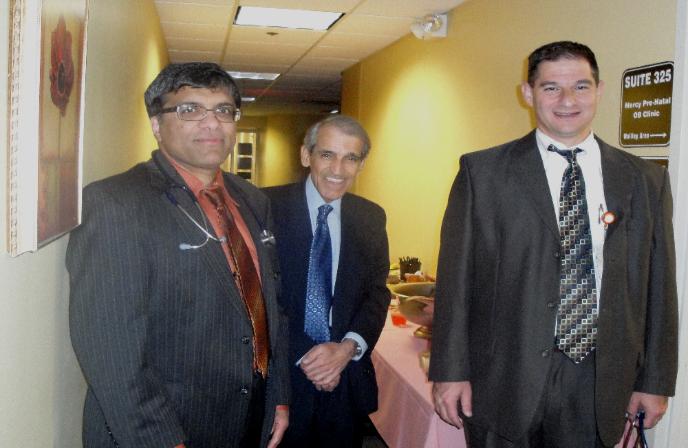
| VOLUNTEER PHYSICIANS OF MERCY CARE CLINIC: From Left to Right: DR. TARIQ SULTAN, DR. NEMAT MOUSSAVIAN, DR. DAN ROTH |


| To view "Herodion: A Fortress During the Gospels," click here. |
| To read "The Wilderness of Abraham, Jesus & Israel- Palestine," click here. |

| To view "In Search of the Messianic Secret - Caesarea Phillipi," click here. |

| To read "Descending to the Dead Sea and Ascending to Qumran," click here. |

| To read "Jury for Jericho," click here. |

| To view "The Empty Tombs," click here. |
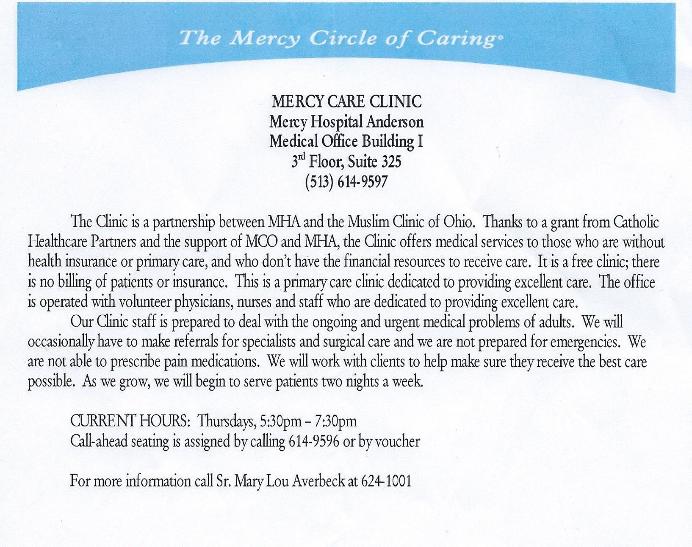
| A Partnership between Mercy Hospital Anderson and Muslim Clinic of Ohio |

| To view "The Call for Simon Peter, Fisherman," click here. |
| To view "Caesarea Maritima as Known to Saint Paul," click here. |

| THE HOLY ISLE OF PATMOS Click here or on photo to see WANGNEWS Special |

| To view "Two Very Different Houses" click here. |

| EPHESUS OF ST. PAUL & ST. JOHN Click here or on photo to see WANGNEWS Special |

To view
"The Holy
Isle of
Patmos"
click here.
"The Holy
Isle of
Patmos"
click here.

To view
"Sufis
Rumi
Konya,"
click
here.
"Sufis
Rumi
Konya,"
click
here.


| MEDITATING MEDITERRANEAN Click here or on photo to see WANGNEWS Special |
| THE WRATH OF PAUL Click here or on photo to see WANGNEWS Special |


To view
"Wrath
of
Paul,"
click
here.
"Wrath
of
Paul,"
click
here.
To view
"Medita-
ting Medi-
terra-
nean,"
click here.
"Medita-
ting Medi-
terra-
nean,"
click here.
TO RETURN TO FIRST PAGE NEWS, CLICK HERE CLICK TO GO TO >PAGE 1> >PAGE 2> >PAGE 3> >PAGE 4> >PAGE 5> >PAGE 6> >PAGE 7> >PAGE 8> >PAGE 9> >PAGE10> >PAGE11> >PAGE 12> >PAGE 13> >PAGE 14> >PAGE 15> >PAGE 16> Photocredit for this page: Charleston C. K. Wang |
 |  |  |

| To view "Caesarea Maritima as Known to Saint Paul," click here. |

| To view "The Call for Simon Peter, Fisherman," click here. |

| To read "In Search of Lazarus," click here. |


| To view "In The Upper Room" click \here. |

| To view "The Church of St. Peter in Gallicantu" click here. |


| To view Group photos of Cincinnati Pilgrims in Jerusalem click here. |
| To view "Visitng the Dome of the Rock" click here. |


ONCE UPON A TIME, ACTUALLY NOT TOO LONG AGO .....
THE CRITICAL MASS DID NOT CAUSE NUCLEAR FISSION IN THE SUPREME COURT
A Comment on Fisher v. University of Texas at Austin, June 24, 2013
Once upon a time, actually not too long ago, an American prophet exhorted:
I have a dream that my four little children will one day live in a nation where they will not be judged by the color of their skin but by the content of their character.
I have a dream today!
The struggle to realize this American dream came up to the United States Supreme Court through the case of Fisher v. University of Texas at Austin in the form of a specific
question of constitutional law: How must a federal court review the University of Texas at Austin’s use of race in undergraduate admissions decisions under the Equal
Protection Clause of the Fourteenth Amendment?
On June 24, 2013, the Court answered: With strict scrutiny according to Grutter v. Bollinger, 539 U.S. 306, 327-333 (2003), Gratz v. Bollinger, 539 U.S. 244, 270 (2003), and
Regents of University of California v. Bakke, 438 U.S. 265 (1978). Since the Fifth Circuit had used a standard other that "strict scrutiny," the case was remanded with
instructions for that Court of Appeals to "assess whether the University [of Texas] has offered sufficient evidence to prove that its admissions program is narrowly tailored
to obtain the benefits of educational diversity."
A supremely wise decision but perhaps, the question as framed by the Court oversimplifies the problem. Indeed, the greater question should be how does this Court ensure
in the future cases that will come before it that one day all little children will live in nation where they will not be judged by the color of their skin? Before one succumbs to
frustration or even despair, hope may be found in the second part of this dream, - that all little children be judged by the content of their character.
A Little Child Dreams of College
The high school graduate applies to be admitted as an undergraduate at the leading flagship public, state-funded university. She completes her application with all the
proper supporting documents, including high school records, standardized test scores, essays, extracurricular activity information, letters of recommendation, and last but
not least, a declaration of her race. The University receives this application from her and from thousands of other aspiring undergraduates. While the University is aware of
and considers an applicant's race, this factor is not given a numerical score value, but is part of the holistic review of numerous criteria that in good faith tries to assess the
whole person. Under the Constitution today, can a university do this or maybe more to increase diversity in its undergraduate population?
Strict Scrutiny of University Admissions Under the Fourteenth Amendment.
The answer yes, provided that such racial criterion can pass strict scrutiny under the Constitution. To withstand such constitutional scrutiny, a university which considers
race in its admissions program must do so using "narrowly tailored measures that further compelling governmental interests." In Gratz, a class action, the Court
disapproved University of Michigan's undergraduate admission policy (of the College of Literature, Science & Arts) which automatically awarded 20 points to
underrepresented minorities on a 150 point scale. At the same time, the Court also rejected the argument that diversity cannot constitute a compelling state interest. Id. at
246, Accord, Grutter v. Bollinger. This approach can be traced back to Justice Powell's 1978 opinion acknowledging that the consideration of race as one of a number of
factors in admissions can in some cases serve a compelling government interest. Bakke at, 317 (a split decision which narrowly held that Allan Bakke qua individual was a
victim of discrimination by reason that the medical school had set aside 16 of the 100 places for non-white students, and ordered him admitted to the medical school at the
University of California at Davis).
Parents Involved in Community Schools v. Seattle School District No. 1, 551 U.S. 701 (2007) is a split decision in which a plurality of the Court rejected racial balancing as a
compelling state interest. Justice Kennedy filed a separate concurring opinion which differed from the plurality by arguing that "diversity, depending on its meaning and
definition, is a compelling educational goal a school district may pursue," and that "race may be one component of that diversity, but other demographic factors, plus special
talents and needs, should also be considered." Justice Kennedy also took care to distinguish Parents from Brown v. Board of Education, 347 U.S. 483 ( 1954), by noting that
the case was "argued on the assumption...that the discrimination in question did not result from de jure [i.e. state initiated] actions." Given the lack of a majority and the fact
that the undergraduate experience is not exactly the same as high school education, care should be exercised in applying Parents as precedent to totally remove race as a
consideration in undergraduate admissions. Parents is reviewed here in order that It should then be no surprise that Justice Kennedy also delivered the Fisher opinion for
the Court.
This Commentator's View is that for Admission to University, Content of Character is Much More Than High School GPAs.
In 2008, 81% of all incoming students at the University of Texas, and 92% of all Texas residents admitted were Top Ten Percent applicants, leaving only 841 slots to be filled by
those who did not graduate in the top ten percent of their high school class. Abigail Fisher. who is white and was one of the latter (below top ten percentile). She failed to
be selected by the holistic Personal Achievement Index (PAI) scale which includes awareness and consideration of race as one of the many factors evaluated. She pointed
to the fact that her academic credentials or index (AI) exceeded those of many admitted minority candidates, and yet she was denied admission because the PAI
discriminated against her race. This is the gravamen of her lawsuit brought by her as an individual (thus also clouding her action with the question of "standing" which the
Court elected to overlook). She took exception to the Fifth Circuit's deference to the UT's good faith effort to ensure classroom diversity and "critical mass" through the
holistic process of filling the residual places after admission of the Top Ten Percenters. She then ventured forth to ask that Grutter be overturned.
The Court in its decision handed down on June 24, 2013 did not overturn Grutter, Gratz, and Bakke. Given prevailing realities in the Nation, diversity in the undergraduate
population of a public university will remain a compelling governmental interest which is amenable to a narrowly tailored admissions policy, this being the strict scrutiny any
such program must satisfy. Certainly there is room within strict scrutiny for both race and content of character. Content of character is ontologically something more than
grade point averages and the high school academic transcript.
Remembering the Dream:
I have a dream that my four little children will one day live in a nation where they will not be judged by the color of their skin but by the content of their character.
I have a dream today!
The Dispensable Conundrum of "Critical Mass."
Fisher had charged that the University of Texas has not even attempted to articulate any educational concept of “critical mass” that satisfied the constitutional benchmark.
The omission, if there is to be one, points towards but cannot quite overtake or nullify Grutter. While an reexamination of Grutter will show that "critical mass" in the
context of university admissions originated in the University of Michigan Law School, it is not the cause or end-all for Fisher's appeal. The term is borrowed from the
densified discipline of nuclear physics where critical mass refers to smallest amount of radioactive material needed for a sustained nuclear chain reaction and ironically has
immense import in the design of atomic bombs. The adoption of this esoteric and quite heavy phrase has confounded some, intimidated a few, and outraged others, as can
be read in the amici curiae briefs across the spectrum. There were both consternation and confusion.
The Court was not overly struck by "critical mass," mentioning it in passing only twice. Due to the hard to understand etymology of "critical mass" and its unfortunate
connotation of nuclear fission - the design, and detonation of atomic bombs - this phrase, having become a "red herring," should best be avoided future discussions on the
the merits of this and future cases. "Critical mass," even if present at all, certainly did not cause a fission within the Court. Instead, the Court judiciously put the critical
mass criteria to safely self dissipate over a indefinite schedule that may run into decades, but most probably under a shorter fuse. Regardless of "critical mass" or the lack
thereof, today Grutter, Gratz, and Bakke remain the law of the land.
The Hour has not Yet Come: It Has Not Been Twenty Five Years
Grutter, in 2003, with all prescience and wisdom noted that
[f]inally, race conscious admissions policies must be limited in time. The Court takes the [Michigan] Law School at its word that it would like nothing better than to
find a race-neutral admissions formula and will terminate its use of racial preferences as soon as practicable. Id. at 310.
Justice Sandra Day O'Connor went on to suggest that it [the Supreme Court]
expects that 25 years from now, the use of racial preferences will no longer be necessary to further the interest approved today. Id.
Apparently, Fisher and many of her amici curiae felt that another 16 years is overly too long to wait. In the alternative they may have felt the 25 years to be obiter dictum.
They screwed up their courage to argue that race in college admissions as a compelling governmental interest has outlived its time. The Court replied that such programs
are viable provided they survive strict scrutiny.
A Critical Question: Is Strict Scrutiny a Panacea to Cure All Maladies?
Fisher, a member of the racial majority, argued that the Fifth Circuit had abandoned strict scrutiny when reviewing her appeal and actually enumerates four specific reasons
in support. At this point, it may be most useful to step backwards to the time when the concept of "strict scrutiny" was berthed. We must recall that most famous footnote
4 of United States v. Carolene Products Co., 304 U.S. 144 (1938) which suggested that "there may be narrower scope for operation of the presumption of constitutionality when
legislation appears on its face to be within a specific prohibition of the Constitution .... whether prejudice against discrete and insular minorities may be a special condition,
which tends seriously to curtail the operation of those political processes ordinarily to be relied upon to protect minorities, and which may call for a correspondingly more
searching judicial inquiry." Id. at 155. Here the Court envisioned a need for constitutional protection of minorities against prejudice that defy a political remedy [i.e. by the
Legislative & Executive Branches], that is prejudice from the majority which necessitates strict scrutiny in the form of a more searching inquiry by the Judicial. From this
lowly beginning, strict scrutiny was conceived - not as protection for the majority, because it is the majority who has easier access to the political process /FN1/; instead it
can be discerned as protection of the last resort for minorities who are without meaningful political options in recourse. Therefore, strict scrutiny in the form when first
conceived was not intended as a panacea for all complaints brought before the judiciary, especially for a grievance from a member of the majority against a protected
constitutional interest of the minority.
Furthermore, strict scrutiny cannot be a panacea when a judgment of the Supreme Court is to be tempered by vigorous dissent, and especially if there is but a plurality. In
such situation, a decision is not free from doubt. This Commentator would respectfully note that it has been said that a decision of the Court is infallible only because it is
final./FN2/ In further support of the assertion that "strict scrutiny" is not a panacea, now is time for respectful but critical recounting of the next instance this Court applied
"strict scrutiny" of a racially charged matter. This was the case of Korematsu v. United States, 323 U.S. 214 (1944). The Justice Roberts of a previous century entered a
vigorous dissent./FN3/ Nevertheless, to this day, Korematsu stands by reason of stare decisis. Any correctable error had to be addressed through the extraordinary writ of
coram nobis at the district court level. Korematsu v. USA, 584 F. Supp. 1406 (N.D. Calif. 1984). Additional redress came from legislation by the United States Congress.
Japanese-American Reparation Act of 1988, H.R. 442, S. 1009. Therefore, perhaps strict scrutiny is not Panacea.
CONCLUSION: Strict Scrutiny Remains the Standard of Review for Race Conscious Admission Standards for Admission to Publicly Funded University.
The foregoing observations and arguments contra notwithstanding, today the United States Supreme Court has affirmed the continuing viability of Grutter, Gratz, and Bakke.
The Grutter standard of "strict scrutiny" and the Bakke standard of "narrow tailoring" remain intact with today's 7-1 majority decision of the U S Supreme Court (with Justice
Ginsburg dissenting) and with this explanation written by Justice Kennedy:
Narrow tailoring also requires that the reviewing court verify that it is “necessary” for a university to use race to achieve the educational benefits of diversity. Bakke,
supra, at 305. This involves a careful judicial inquiry into whether a university could achieve sufficient diversity without using racial classifications. Although “[n]arrow
tailoring does not require exhaustion of every conceivable race-neutral alternative,” strict scrutiny does require a court to examine with care, and not defer to, a
university’s “serious, good faith consideration of workable race-neutral alternatives.” See Grutter, 539 U. S., at 339–340 (emphasis added). Consideration by the
university is of course necessary, but it is not sufficient to satisfy strict scrutiny: The reviewing court must ultimately be satisfied that no workable race-neutral
alternatives would produce the educational benefits of diversity. If “ ‘a nonracial approach . . . could promote the substantial interest about as well and at tolerable
administrative expense,’ ” Wygant v. Jackson Bd. of Ed., 476 U. S. 267, n. 6 (1986) (quoting Greenawalt, Judicial Scrutiny of “Benign” Racial Preference in Law School
Admissions, 75 Colum. L. Rev. 559, 578–579 (1975)), then the university may not consider race.
Perhaps, the practical understanding of "strict scrutiny" is can be further and best gleaned from the following:
Strict scrutiny must not be “ ‘strict in theory, but fatal in fact,’ Adarand Constructors, Inc. v. Peña, 515 U. S. 200, 237 (1995) ); see also Grutter at 326. But the opposite is
also true. Strict scrutiny must not be strict in theory but feeble in fact. In order for judicial review to be meaningful, a university must make a showing that its plan is
narrowly tailored to achieve the only interest that this Court has approved in this context: the benefits of a student body diversity that “encompasses a . . . broa[d] array
of qualifications and characteristics of which racial or ethnic origin is but a single though important element.” Bakke at 315 (opinion of Powell, J.).
In conclusion, the Fisher Court reaffirmed stare decisis that Grutter, Gratz, and Bakke shall remain the law of the land, until the matter can again be analyzed by the Supreme
Court sometime in the future, after Fisher has made its trip back down to the Fifth Circuit (when the question of "standing" may resurface as equitable remedies available to
Abigail Fisher are rendered moot by time), or possibly through another case. During this time, the dream goes on:
I have a dream that my four little children will one day live in a nation where they will not be judged by the color of their skin but by the content of their character.
I have a dream today!
Comment by Charleston C. K. Wang, June 24, 2013. COPYRIGHT ALL RIGHTS RESERVED. www.wanglaw.net
Read the U S Supreme Court opinion of Fisher v. University of Texas at Austin by clicking here,
Footnotes:
/FN1/ See, e.g. California's Proposition 209. Cf. Michigan Civil Rights Initiative (MCRI), or Proposal 2 which was overturned in Coalition to Defend Affirmative Action v. Regents
of the University of Michigan, Nos. 08-1387/1389/1534, (6th Cir. 07/01/2011). This question will be heard in the U S Supreme Court on October 15, 2013 under the caption
Schuette v. Coalition to Defend Affirmative Action.
/FN2/ But see, e.g., Dred Scott v. Sanford, 60 U.S. 393 (1857).
/FN3/ This Justice Owen Josephus Roberts was also the swing vote in Carolene. During World War II, he headed the commission that investigated the attack on Pearl Harbor
and was one of the three Justices who dissented in Korematsu.
THE CRITICAL MASS DID NOT CAUSE NUCLEAR FISSION IN THE SUPREME COURT
A Comment on Fisher v. University of Texas at Austin, June 24, 2013
Once upon a time, actually not too long ago, an American prophet exhorted:
I have a dream that my four little children will one day live in a nation where they will not be judged by the color of their skin but by the content of their character.
I have a dream today!
The struggle to realize this American dream came up to the United States Supreme Court through the case of Fisher v. University of Texas at Austin in the form of a specific
question of constitutional law: How must a federal court review the University of Texas at Austin’s use of race in undergraduate admissions decisions under the Equal
Protection Clause of the Fourteenth Amendment?
On June 24, 2013, the Court answered: With strict scrutiny according to Grutter v. Bollinger, 539 U.S. 306, 327-333 (2003), Gratz v. Bollinger, 539 U.S. 244, 270 (2003), and
Regents of University of California v. Bakke, 438 U.S. 265 (1978). Since the Fifth Circuit had used a standard other that "strict scrutiny," the case was remanded with
instructions for that Court of Appeals to "assess whether the University [of Texas] has offered sufficient evidence to prove that its admissions program is narrowly tailored
to obtain the benefits of educational diversity."
A supremely wise decision but perhaps, the question as framed by the Court oversimplifies the problem. Indeed, the greater question should be how does this Court ensure
in the future cases that will come before it that one day all little children will live in nation where they will not be judged by the color of their skin? Before one succumbs to
frustration or even despair, hope may be found in the second part of this dream, - that all little children be judged by the content of their character.
A Little Child Dreams of College
The high school graduate applies to be admitted as an undergraduate at the leading flagship public, state-funded university. She completes her application with all the
proper supporting documents, including high school records, standardized test scores, essays, extracurricular activity information, letters of recommendation, and last but
not least, a declaration of her race. The University receives this application from her and from thousands of other aspiring undergraduates. While the University is aware of
and considers an applicant's race, this factor is not given a numerical score value, but is part of the holistic review of numerous criteria that in good faith tries to assess the
whole person. Under the Constitution today, can a university do this or maybe more to increase diversity in its undergraduate population?
Strict Scrutiny of University Admissions Under the Fourteenth Amendment.
The answer yes, provided that such racial criterion can pass strict scrutiny under the Constitution. To withstand such constitutional scrutiny, a university which considers
race in its admissions program must do so using "narrowly tailored measures that further compelling governmental interests." In Gratz, a class action, the Court
disapproved University of Michigan's undergraduate admission policy (of the College of Literature, Science & Arts) which automatically awarded 20 points to
underrepresented minorities on a 150 point scale. At the same time, the Court also rejected the argument that diversity cannot constitute a compelling state interest. Id. at
246, Accord, Grutter v. Bollinger. This approach can be traced back to Justice Powell's 1978 opinion acknowledging that the consideration of race as one of a number of
factors in admissions can in some cases serve a compelling government interest. Bakke at, 317 (a split decision which narrowly held that Allan Bakke qua individual was a
victim of discrimination by reason that the medical school had set aside 16 of the 100 places for non-white students, and ordered him admitted to the medical school at the
University of California at Davis).
Parents Involved in Community Schools v. Seattle School District No. 1, 551 U.S. 701 (2007) is a split decision in which a plurality of the Court rejected racial balancing as a
compelling state interest. Justice Kennedy filed a separate concurring opinion which differed from the plurality by arguing that "diversity, depending on its meaning and
definition, is a compelling educational goal a school district may pursue," and that "race may be one component of that diversity, but other demographic factors, plus special
talents and needs, should also be considered." Justice Kennedy also took care to distinguish Parents from Brown v. Board of Education, 347 U.S. 483 ( 1954), by noting that
the case was "argued on the assumption...that the discrimination in question did not result from de jure [i.e. state initiated] actions." Given the lack of a majority and the fact
that the undergraduate experience is not exactly the same as high school education, care should be exercised in applying Parents as precedent to totally remove race as a
consideration in undergraduate admissions. Parents is reviewed here in order that It should then be no surprise that Justice Kennedy also delivered the Fisher opinion for
the Court.
This Commentator's View is that for Admission to University, Content of Character is Much More Than High School GPAs.
In 2008, 81% of all incoming students at the University of Texas, and 92% of all Texas residents admitted were Top Ten Percent applicants, leaving only 841 slots to be filled by
those who did not graduate in the top ten percent of their high school class. Abigail Fisher. who is white and was one of the latter (below top ten percentile). She failed to
be selected by the holistic Personal Achievement Index (PAI) scale which includes awareness and consideration of race as one of the many factors evaluated. She pointed
to the fact that her academic credentials or index (AI) exceeded those of many admitted minority candidates, and yet she was denied admission because the PAI
discriminated against her race. This is the gravamen of her lawsuit brought by her as an individual (thus also clouding her action with the question of "standing" which the
Court elected to overlook). She took exception to the Fifth Circuit's deference to the UT's good faith effort to ensure classroom diversity and "critical mass" through the
holistic process of filling the residual places after admission of the Top Ten Percenters. She then ventured forth to ask that Grutter be overturned.
The Court in its decision handed down on June 24, 2013 did not overturn Grutter, Gratz, and Bakke. Given prevailing realities in the Nation, diversity in the undergraduate
population of a public university will remain a compelling governmental interest which is amenable to a narrowly tailored admissions policy, this being the strict scrutiny any
such program must satisfy. Certainly there is room within strict scrutiny for both race and content of character. Content of character is ontologically something more than
grade point averages and the high school academic transcript.
Remembering the Dream:
I have a dream that my four little children will one day live in a nation where they will not be judged by the color of their skin but by the content of their character.
I have a dream today!
The Dispensable Conundrum of "Critical Mass."
Fisher had charged that the University of Texas has not even attempted to articulate any educational concept of “critical mass” that satisfied the constitutional benchmark.
The omission, if there is to be one, points towards but cannot quite overtake or nullify Grutter. While an reexamination of Grutter will show that "critical mass" in the
context of university admissions originated in the University of Michigan Law School, it is not the cause or end-all for Fisher's appeal. The term is borrowed from the
densified discipline of nuclear physics where critical mass refers to smallest amount of radioactive material needed for a sustained nuclear chain reaction and ironically has
immense import in the design of atomic bombs. The adoption of this esoteric and quite heavy phrase has confounded some, intimidated a few, and outraged others, as can
be read in the amici curiae briefs across the spectrum. There were both consternation and confusion.
The Court was not overly struck by "critical mass," mentioning it in passing only twice. Due to the hard to understand etymology of "critical mass" and its unfortunate
connotation of nuclear fission - the design, and detonation of atomic bombs - this phrase, having become a "red herring," should best be avoided future discussions on the
the merits of this and future cases. "Critical mass," even if present at all, certainly did not cause a fission within the Court. Instead, the Court judiciously put the critical
mass criteria to safely self dissipate over a indefinite schedule that may run into decades, but most probably under a shorter fuse. Regardless of "critical mass" or the lack
thereof, today Grutter, Gratz, and Bakke remain the law of the land.
The Hour has not Yet Come: It Has Not Been Twenty Five Years
Grutter, in 2003, with all prescience and wisdom noted that
[f]inally, race conscious admissions policies must be limited in time. The Court takes the [Michigan] Law School at its word that it would like nothing better than to
find a race-neutral admissions formula and will terminate its use of racial preferences as soon as practicable. Id. at 310.
Justice Sandra Day O'Connor went on to suggest that it [the Supreme Court]
expects that 25 years from now, the use of racial preferences will no longer be necessary to further the interest approved today. Id.
Apparently, Fisher and many of her amici curiae felt that another 16 years is overly too long to wait. In the alternative they may have felt the 25 years to be obiter dictum.
They screwed up their courage to argue that race in college admissions as a compelling governmental interest has outlived its time. The Court replied that such programs
are viable provided they survive strict scrutiny.
A Critical Question: Is Strict Scrutiny a Panacea to Cure All Maladies?
Fisher, a member of the racial majority, argued that the Fifth Circuit had abandoned strict scrutiny when reviewing her appeal and actually enumerates four specific reasons
in support. At this point, it may be most useful to step backwards to the time when the concept of "strict scrutiny" was berthed. We must recall that most famous footnote
4 of United States v. Carolene Products Co., 304 U.S. 144 (1938) which suggested that "there may be narrower scope for operation of the presumption of constitutionality when
legislation appears on its face to be within a specific prohibition of the Constitution .... whether prejudice against discrete and insular minorities may be a special condition,
which tends seriously to curtail the operation of those political processes ordinarily to be relied upon to protect minorities, and which may call for a correspondingly more
searching judicial inquiry." Id. at 155. Here the Court envisioned a need for constitutional protection of minorities against prejudice that defy a political remedy [i.e. by the
Legislative & Executive Branches], that is prejudice from the majority which necessitates strict scrutiny in the form of a more searching inquiry by the Judicial. From this
lowly beginning, strict scrutiny was conceived - not as protection for the majority, because it is the majority who has easier access to the political process /FN1/; instead it
can be discerned as protection of the last resort for minorities who are without meaningful political options in recourse. Therefore, strict scrutiny in the form when first
conceived was not intended as a panacea for all complaints brought before the judiciary, especially for a grievance from a member of the majority against a protected
constitutional interest of the minority.
Furthermore, strict scrutiny cannot be a panacea when a judgment of the Supreme Court is to be tempered by vigorous dissent, and especially if there is but a plurality. In
such situation, a decision is not free from doubt. This Commentator would respectfully note that it has been said that a decision of the Court is infallible only because it is
final./FN2/ In further support of the assertion that "strict scrutiny" is not a panacea, now is time for respectful but critical recounting of the next instance this Court applied
"strict scrutiny" of a racially charged matter. This was the case of Korematsu v. United States, 323 U.S. 214 (1944). The Justice Roberts of a previous century entered a
vigorous dissent./FN3/ Nevertheless, to this day, Korematsu stands by reason of stare decisis. Any correctable error had to be addressed through the extraordinary writ of
coram nobis at the district court level. Korematsu v. USA, 584 F. Supp. 1406 (N.D. Calif. 1984). Additional redress came from legislation by the United States Congress.
Japanese-American Reparation Act of 1988, H.R. 442, S. 1009. Therefore, perhaps strict scrutiny is not Panacea.
CONCLUSION: Strict Scrutiny Remains the Standard of Review for Race Conscious Admission Standards for Admission to Publicly Funded University.
The foregoing observations and arguments contra notwithstanding, today the United States Supreme Court has affirmed the continuing viability of Grutter, Gratz, and Bakke.
The Grutter standard of "strict scrutiny" and the Bakke standard of "narrow tailoring" remain intact with today's 7-1 majority decision of the U S Supreme Court (with Justice
Ginsburg dissenting) and with this explanation written by Justice Kennedy:
Narrow tailoring also requires that the reviewing court verify that it is “necessary” for a university to use race to achieve the educational benefits of diversity. Bakke,
supra, at 305. This involves a careful judicial inquiry into whether a university could achieve sufficient diversity without using racial classifications. Although “[n]arrow
tailoring does not require exhaustion of every conceivable race-neutral alternative,” strict scrutiny does require a court to examine with care, and not defer to, a
university’s “serious, good faith consideration of workable race-neutral alternatives.” See Grutter, 539 U. S., at 339–340 (emphasis added). Consideration by the
university is of course necessary, but it is not sufficient to satisfy strict scrutiny: The reviewing court must ultimately be satisfied that no workable race-neutral
alternatives would produce the educational benefits of diversity. If “ ‘a nonracial approach . . . could promote the substantial interest about as well and at tolerable
administrative expense,’ ” Wygant v. Jackson Bd. of Ed., 476 U. S. 267, n. 6 (1986) (quoting Greenawalt, Judicial Scrutiny of “Benign” Racial Preference in Law School
Admissions, 75 Colum. L. Rev. 559, 578–579 (1975)), then the university may not consider race.
Perhaps, the practical understanding of "strict scrutiny" is can be further and best gleaned from the following:
Strict scrutiny must not be “ ‘strict in theory, but fatal in fact,’ Adarand Constructors, Inc. v. Peña, 515 U. S. 200, 237 (1995) ); see also Grutter at 326. But the opposite is
also true. Strict scrutiny must not be strict in theory but feeble in fact. In order for judicial review to be meaningful, a university must make a showing that its plan is
narrowly tailored to achieve the only interest that this Court has approved in this context: the benefits of a student body diversity that “encompasses a . . . broa[d] array
of qualifications and characteristics of which racial or ethnic origin is but a single though important element.” Bakke at 315 (opinion of Powell, J.).
In conclusion, the Fisher Court reaffirmed stare decisis that Grutter, Gratz, and Bakke shall remain the law of the land, until the matter can again be analyzed by the Supreme
Court sometime in the future, after Fisher has made its trip back down to the Fifth Circuit (when the question of "standing" may resurface as equitable remedies available to
Abigail Fisher are rendered moot by time), or possibly through another case. During this time, the dream goes on:
I have a dream that my four little children will one day live in a nation where they will not be judged by the color of their skin but by the content of their character.
I have a dream today!
Comment by Charleston C. K. Wang, June 24, 2013. COPYRIGHT ALL RIGHTS RESERVED. www.wanglaw.net
Read the U S Supreme Court opinion of Fisher v. University of Texas at Austin by clicking here,
Footnotes:
/FN1/ See, e.g. California's Proposition 209. Cf. Michigan Civil Rights Initiative (MCRI), or Proposal 2 which was overturned in Coalition to Defend Affirmative Action v. Regents
of the University of Michigan, Nos. 08-1387/1389/1534, (6th Cir. 07/01/2011). This question will be heard in the U S Supreme Court on October 15, 2013 under the caption
Schuette v. Coalition to Defend Affirmative Action.
/FN2/ But see, e.g., Dred Scott v. Sanford, 60 U.S. 393 (1857).
/FN3/ This Justice Owen Josephus Roberts was also the swing vote in Carolene. During World War II, he headed the commission that investigated the attack on Pearl Harbor
and was one of the three Justices who dissented in Korematsu.
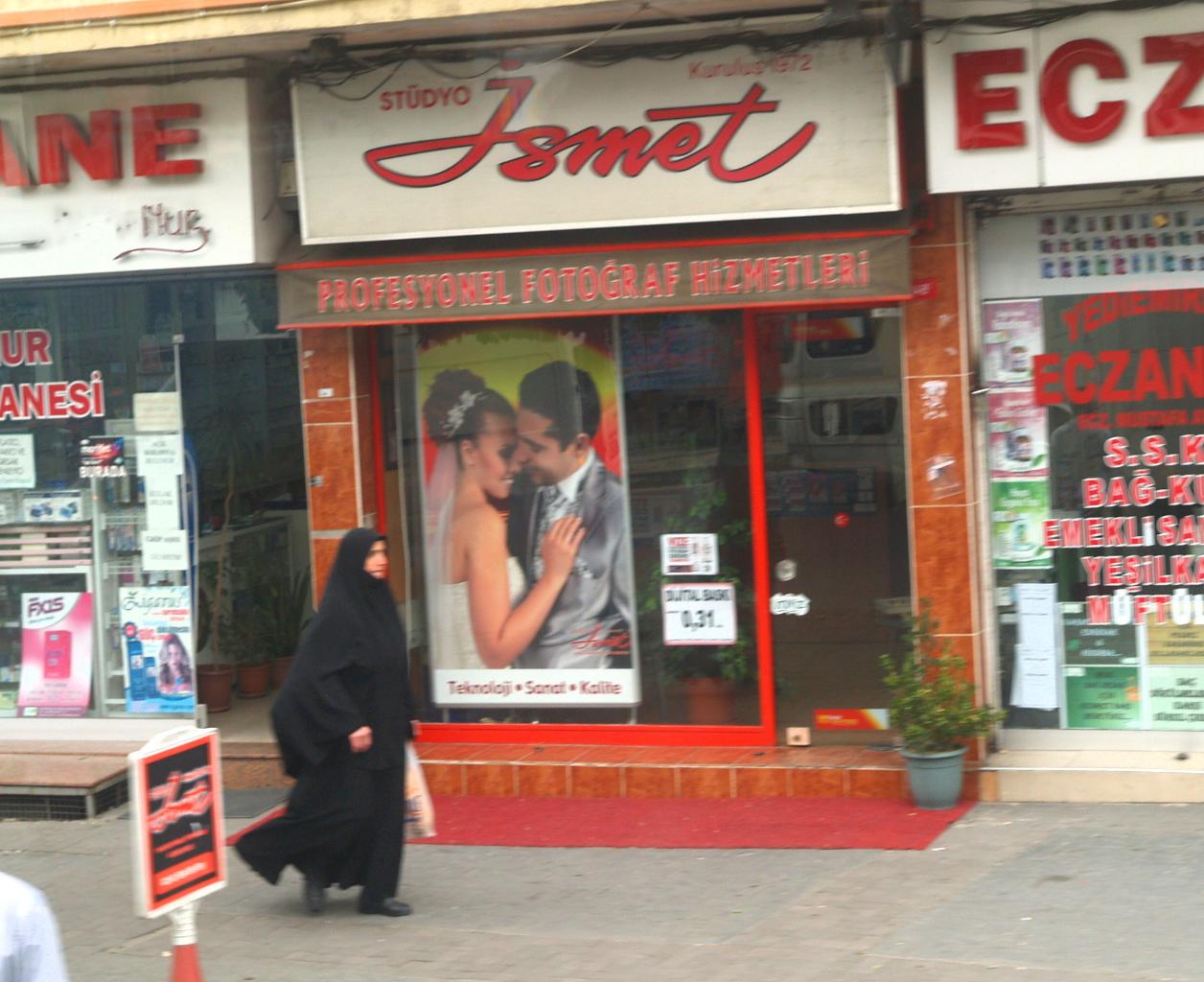
| PLEASE CLIICK ON PHOTO TO SEE COMPLETE PHOTONEWS SPECIAL ON "THE FACES OF TURKEY." |




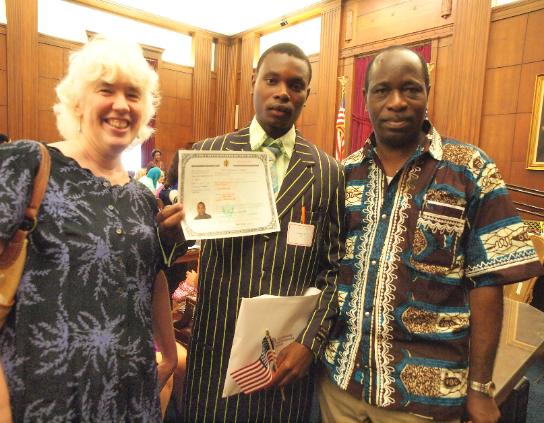
| A NEW CITIZEN OF THE UNITED STATES OF AMERICA On his right is Mary Joan Reutter, Esquire 8/23/2013 |
| ROXANNE QUALLS FOR MAYOR OF THE CITY OF CINCINNATI |
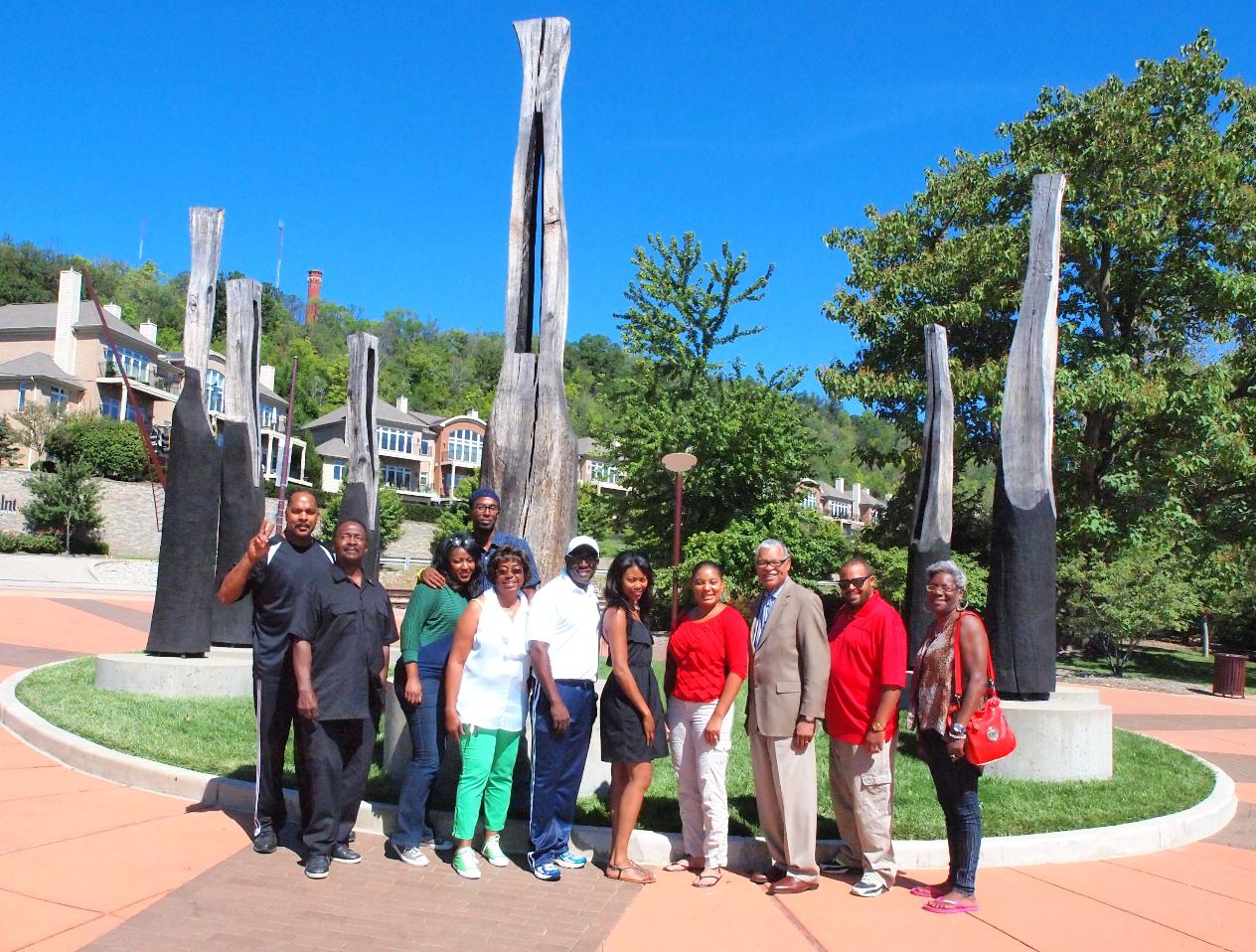
| PICNIC FOR THE STAFF & CIRV STREET OUTREACH WORKERS OF THE CINCINNATI HUMAN RELATIONS COMMISSION 9/6/2013 Mayor Theodore M. Berry International Friendship Park, Cincinnati, Ohio, USA CIRV = Cincinnati Initiative to Reduce Violence |
| VILLAGE OF SILVERTON National Night Out - Meet Police and Fire Departments 8/6/2013 |
| SILVERTON 2ND ANNUAL CAR SHOW 7/20/2013 |
To see
Photonews
Special
Click on
Photograph
Photonews
Special
Click on
Photograph
To see
Photonews
Special
Click on
Photograph
Photonews
Special
Click on
Photograph
THE FACES OF TURKEY
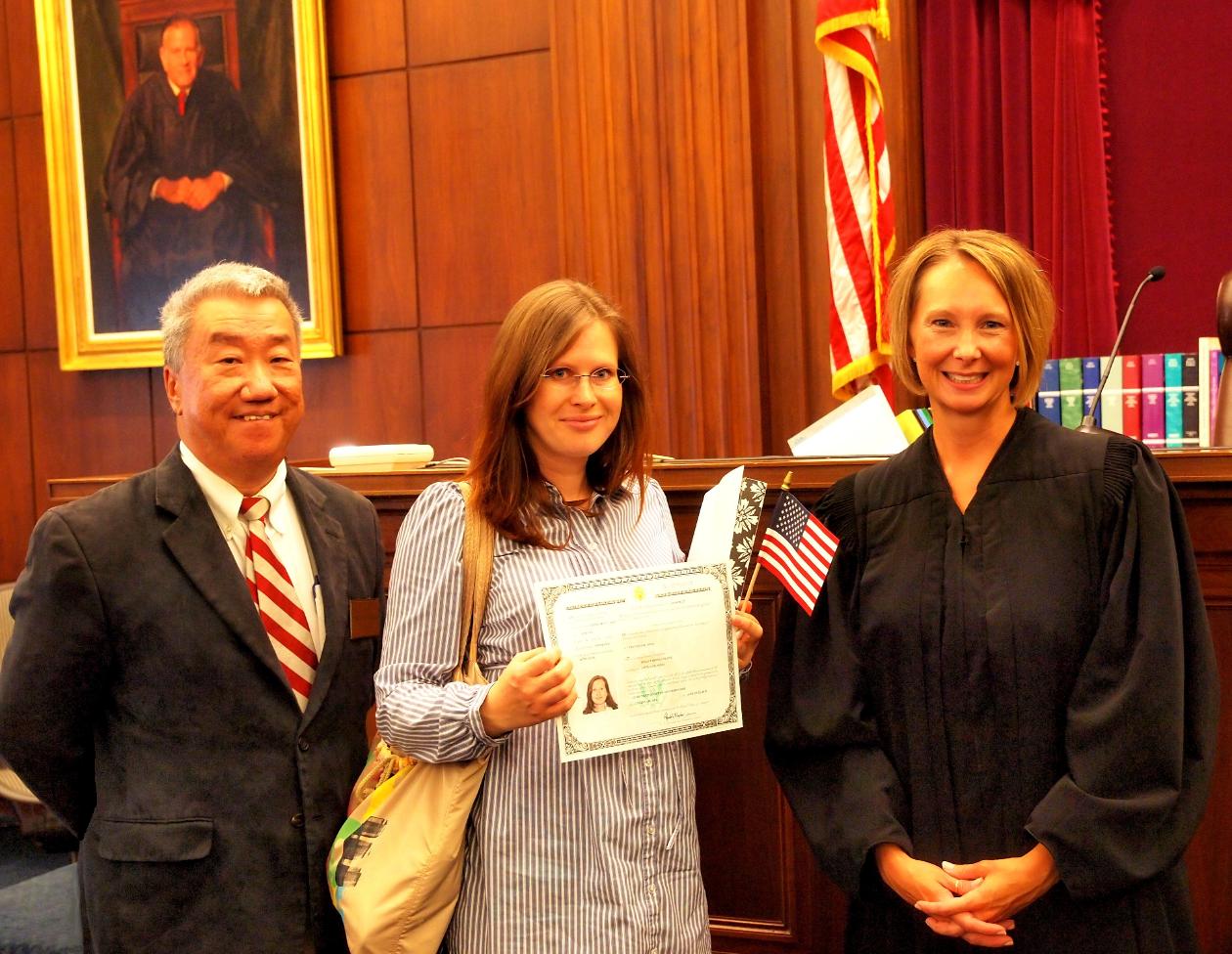
| NATURALIZATION CEREMONY IN THE UNITED STATES DISTRICT COURT FOR SOUTHERN OHIO 8/23/2013 From left to right: Charleston C. K. Wang, Esq,. Ms. Erika Tamasauskaite, & U. S. Magistrate Judge Stephanie Bowman |
Photocredit: Mary Joan Reutter
| EVERY MONDAY EVENING 5 - 6 P.M. |
| EVERY MONDAY EVENING 5 - 6 P.M. |